Midsize GovTech firms often burn real engineering time on solicitations they were never positioned to win. What’s missing is a filter that says no before the team commits.
That’s the mechanism behind most proposal fatigue and burnout in scaling public-sector vendors. The problem sits in which bids get chosen, and an RFP go/no-go framework fixes it. It forces you to make an objective decision before you commit resources.
Why is your government RFP process failing?
Scaling vendors often treat every RFP notification as an opportunity worth chasing. That instinct is the leak. Pipeline volume feels like progress. However, without a filter, it’s just unpaid overtime with a deadline attached. Knowing how to improve RFP process efficiency starts with acknowledging that not every lead is a good lead.
Signs your government RFP process has no filter:
- Engineers and capture staff pull double duty across three or more live solicitations at once
- Nobody can say, in one sentence, why a given bid is worth pursuing
- Win rates sit below what the firm itself would call healthy, with no one tracking it
- The same unqualified lead type keeps reappearing on the pipeline, bid after bid
What is bid creep?
Bid creep happens when a vendor keeps adding solicitations to the pipeline without removing weak ones. Each addition seems small. The costs keep rising. A capture team stretched across proposals with no realistic shot starves the bids that could actually win. Many responses fail before submission because the underlying proposal infrastructure cannot support the volume.
When does pipeline growth turn into resource exhaustion?
A growing pipeline looks like progress on a dashboard, but without a way to distinguish high-probability wins from resource drains, it quickly leads to burnout. To keep your team from wasting energy on low-probability bids, you must implement a formal quantitative filter that validates the strategic value of an opportunity before committing 40 hours to a response.
How do you use a modular RFP go/no-go framework?
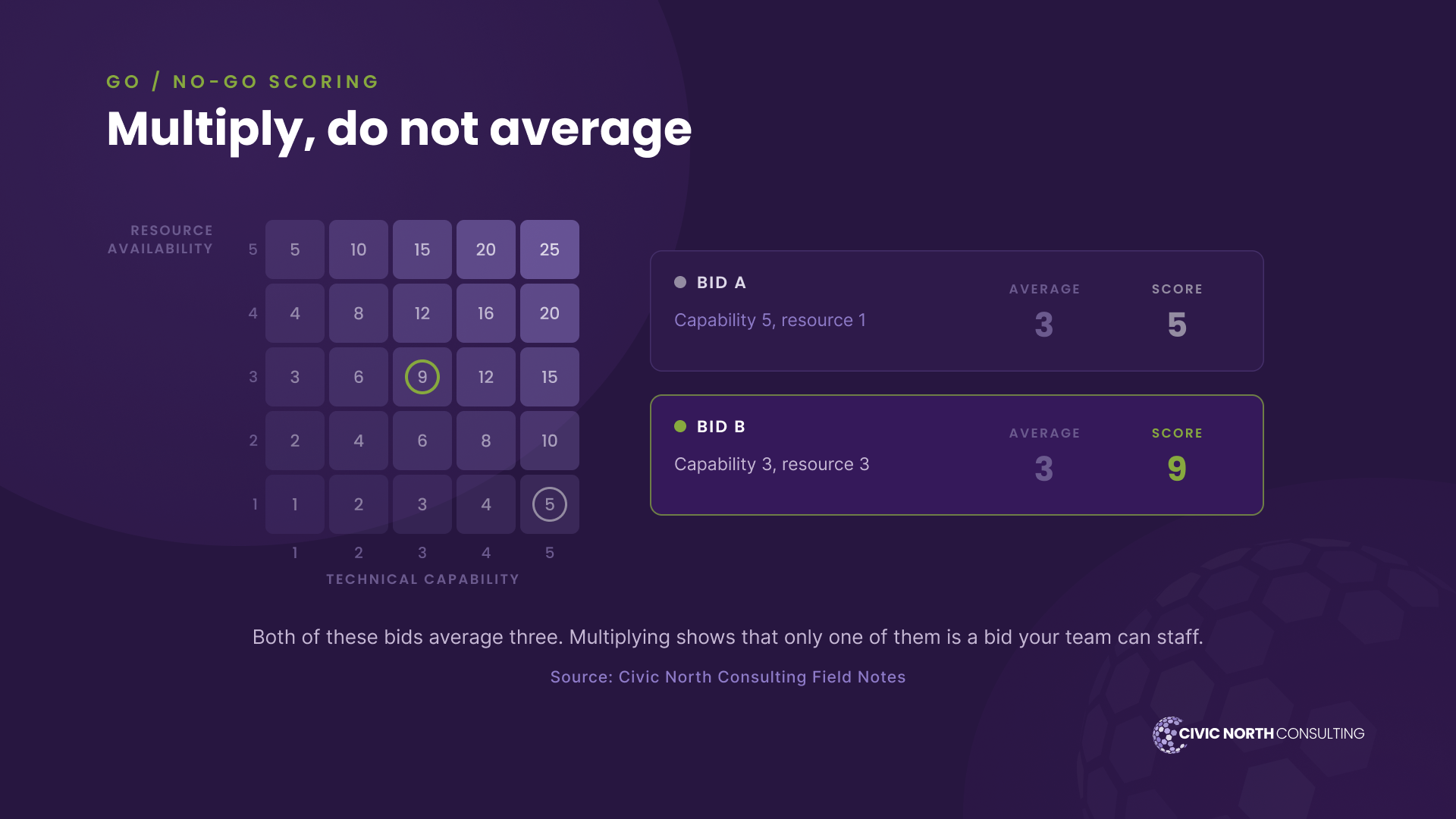
The fix is a scoring matrix. It weighs two axes independently: technical capability and resource availability. Don’t blend these into one score, because that hides the real risk. Adopting a standardized proposal response framework ensures that every bid is evaluated against the same criteria.
Technical capability measures whether your firm’s product, certifications, and past performance fit the solicitation requirements. Resource availability measures whether your current team has the capacity to respond and deliver. A bid can score high on capability. It’s still a no-go if resource availability is near zero.
Win probability depends on both. Score each axis from 1 to 5. Multiply the scores rather than averaging them. This exposes bids where one variable is dragging the other down. Teams that run this matrix often walk away from leads that looked like big opportunities. For a sharper look at how this scoring plays out against incumbent advantage and compliance readiness, see this go/no-go scoring breakdown. You can often determine bid viability in five minutes using a standardized scorecard.
Why prioritize cooperative contract vehicles for volume?
One-off RFPs are expensive for every dollar you win. Cooperative vehicles change that math. They group demand together. These master agreements give buyers better pricing through the collective volume of state and local purchases, and give you one contract many agencies can buy from. An awarded contract vehicle generates revenue only when you actively map the buyers who can use it. Refining your GovTech procurement strategy means shifting focus from chasing individual RFPs to maximizing these vehicles.
Cooperative evaluation steps
- Confirm the submission channel. Certain solicitations, for instance, require all proposals through specific procurement portals. Nothing submitted outside it counts.
- Check the Master Agreement’s eligible entity list. A cooperative award can open access to many participating agencies, and who is eligible differs by cooperative (and, under NASPO ValuePoint, by state). Effective public sector proposal development requires this level of due diligence at the front end.
- Weigh the deadline against your current pipeline load using the same scoring matrix above.
How do you build your readiness sprint?
- Build the two-axis scoring matrix and score every open solicitation in your pipeline this week
- Drop any bid scoring below your threshold, regardless of size
- Redirect freed capacity toward one cooperative vehicle solicitation
- Run a short readiness sprint to confirm your compliance matrix is current before the next wave hits
Public sector sales scaling doesn’t require a bigger internal team if you stop chasing every solicitation. Run the matrix on your current pipeline before your next deadline.

Not sure whether a solicitation is worth pursuing? Book a diagnostic call to see where your team stands before the deadline clock starts. Thirty minutes, no deck.