Public safety vendor proposals often fail before an evaluator reaches the product section. You can describe truly capable equipment and still create a responsiveness problem. This can happen because the submission ignored a required form. It may also have missed the compliance language. Or it may have ignored the evaluation criteria used for scoring. Evaluators are reviewing a submission, not reading a product manual. The ones that score well can be reviewed without being translated first.
Why do generic public safety vendor proposals fail the scoring test?
Generic proposals usually fail in one of two places: responsiveness or technical evaluation. Responsiveness is the initial binary check against submission requirements. Technical evaluation is a points-scored ranking of the offer. This means a compliant submission still needs evidence mapped to the stated criteria. Many organizations find that high RFP failure rates stem from a lack of proposal infrastructure rather than technical capability.
What is the technical spec trap?
A police, fire, or EMS buyer needs proof that a product fits a defined operational and compliance context. Brightness, battery life, and service tiers do not establish that fit. They are answers to a question nobody asked. What the proposal needs is a traceable line from each claim to the requirement it answers.
We use a compliance matrix for this reason. It separates a feature from the requirement that makes the feature relevant. That distinction turns a catalog description into procurement-grade evidence. It helps prevent inconsistent documentation from hurting an otherwise strong bid.
Why does multi-state compliance matter?
A vendor entering public-sector sales may face different rules across jurisdictions. They will see different solicitations, contract terms, and submission rules. Cooperative purchasing can widen access, but you still must understand the governing vehicle. The language must match the contract and the evaluator’s rubric. It should not read like a generic federal or commercial pitch. Certification requirements also follow these rules. Supplier diversity requirements in public facility services often appear as scored evaluation factors, not just paperwork. Successful public safety resellers shift focus from selling hardware. They offer unified, compliant solutions that meet these local requirements.
How do NASPO ValuePoint contracts change the approach?
Understanding NASPO ValuePoint contracts is key for vendors. They support multi-state cooperative contracts for public safety lights, sirens, and accessories. This happens through one competitive process (NASPO). That makes contract alignment part of the sales process from the first talk, not something the proposal team gets later.
NASPO ValuePoint workflow
For a vendor mapping products to these contracts, the working sequence is straightforward:
- Start with the contract scope: Identify the product categories, eligible purchasers, and ordering conditions before writing claims.
- Translate features into requirements: Link each technical feature to a vehicle, safety, installation, or operational need. Use the needs named in the relevant materials.
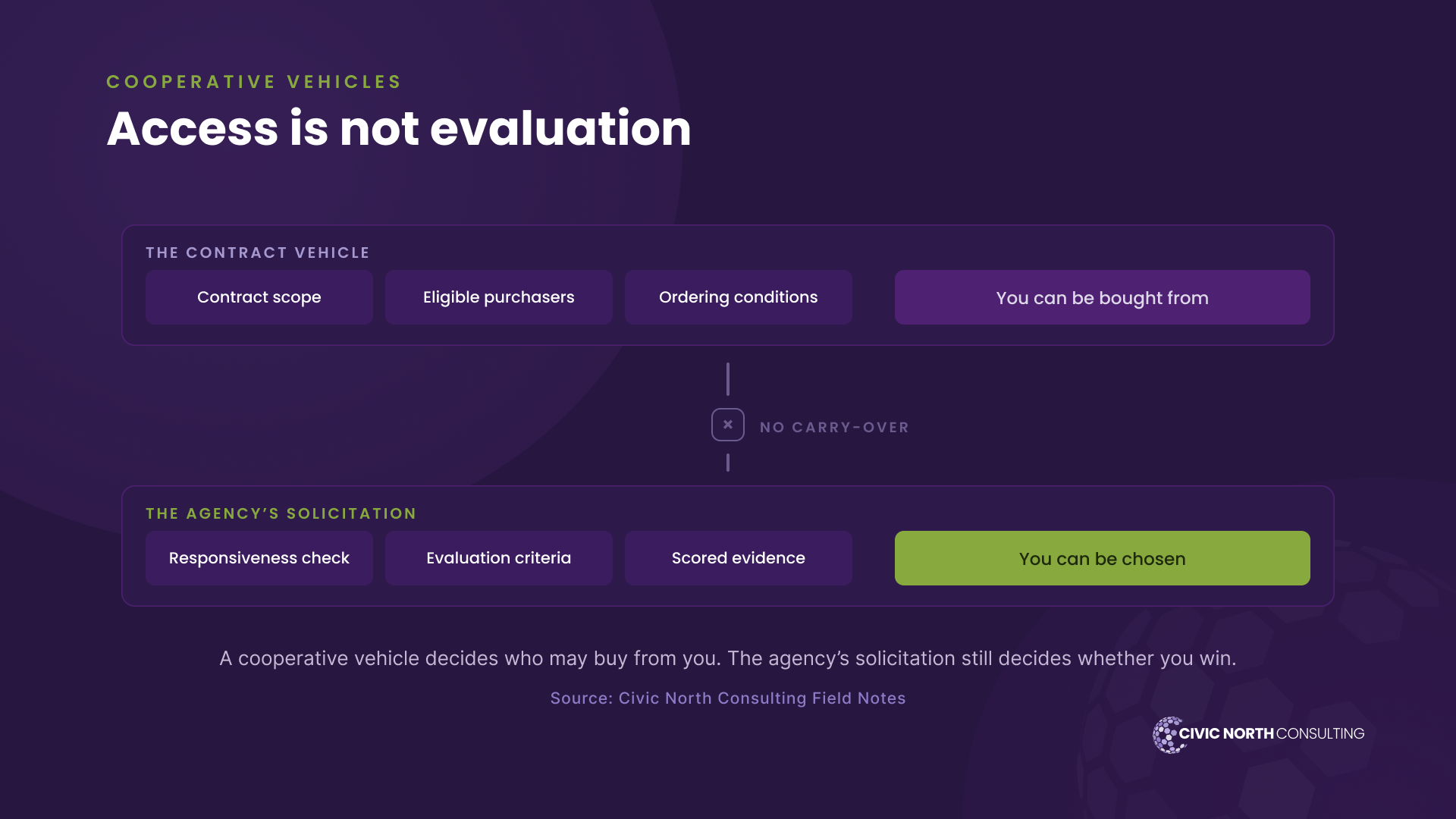
- Separate access from evaluation: Contract availability may create a purchasing path. However, an agency’s solicitation still determines how technical merit is scored.
- Build reusable evidence: Maintain a current compliance matrix, product documentation, and approved response language for future solicitations.
What does a video and surveillance solicitation actually require?
Responding on video products takes more than a commercial explanation of image quality or storage. A GovTech procurement strategy connects the technology to agency use and required controls (NASPO ValuePoint). It also accounts for implementation conditions and the scoring rubric.
Automated screening is often part of the first pass. Knowing that the first reader may not be a person should change how you structure a document. Use clear headings. Use requirement numbers that match the solicitation. Put evidence where the reader expects to find it. Structure it for retrieval, and write it for the person on the ground who has to live with the outcome.
Rescue equipment follows the same logic. Structured cooperative vehicles can organize procurement for rescue and public protection equipment (Safeware, NASPO contracts). Your advantage comes from knowing how the vehicle works and writing to it. Competitors can copy your product language in an afternoon. Procurement fluency takes them considerably longer.
What should a vendor audit next?
- Map the requirements. Review one target solicitation. Mark every responsiveness instruction, technical criterion, and required attachment.
- Test the evidence. Confirm that each product claim has supporting documentation, with a clear connection to police, fire, or EMS operations.
- Assess readiness. Create a reusable library for organizational information, past performance, compliance responses, and program alignment.
Writing that survives review is writing that is specific. Audit one live proposal against a compliance matrix. Make sure you communicate your value before anything else. This keeps your technical merits from getting buried in administrative boilerplate.
If you want a read on where your bids are losing points, our calendar is open.